
An online retailer is confronted with a major challenge, which has a direct effect on the bottom line of the company: customers placing goods on their carts but not making upgrades. This phenomenon deprives e-commerce businesses of billions of revenue every year. Luckily, the Shopping Cart Abandonment Software has come into the scene as a potent tool to retrieve such failed sales.
These advanced instruments assist companies in knowing the reasons why people leave, why the indecisive shoppers are contacted automatically, and why they should be encouraged to get back and finish their purchases. Considering that in 2026 the rates of cart abandonment have already reached nearly 70 percent, the idea of incorporating the right recovery software is not a mere option, but the key to being successful in e-commerce and competitive in the market.
What is Shopping Cart Abandonment Software?
Shopping Cart Abandonment Software is a technology application that is specific to detecting, monitoring and salvaging lost revenue to customers who add or add to their online shopping cart and abandon. These platforms involve behavioral tracking, automated communication strategies and tactical rewards to reconnect with potential customers. The software gathers the visitor data, tracks cart activity, and sends targeted recovery campaigns in the form of email, SMS, push notification, or retargeting advertisements.
Through abandoned pattern identification and customer behavior analysis, the tools also enable the e-commerce businesses to minimize loss of revenue, enhance conversion rates, and the overall buying experience and they also give the business insightful information of where the checkout friction occurs.
How It Works
- Visitor Tracking: Tracks visitor activity like browsing, cart additions, and exits—no login required.
- Abandonment Detection: Automatically identifies cart abandonment and triggers recovery workflows.
- Data Capture: Collects customer details (email, phone, cart items) at key checkout touchpoints.
- Automated Triggers: Sends personalized recovery messages via email, SMS, or on-site prompts.
- Incentive Delivery: Offers timed discounts or free shipping to maximize recovery without hurting margins.
- Performance Analytics: Dashboards track recovery rate, revenue, and campaign performance.
Benefits
- Revenue Recovery: Recovers ~10–30% of abandoned carts without extra acquisition costs.
- Customer Insights: Reveals checkout issues, pricing concerns, and technical drop-off points.
- Automated Efficiency: Runs 24/7 with zero manual effort.
- Personalization: Sends targeted messages based on cart value, behavior, and customer history.
- Multi-Channel Reach: Engages users via email, SMS, and push notifications.
- Better Experience: Helpful reminders encourage completion without being intrusive.
Shopping Cart Abandonment Metrics
- Abandonment Rate: This basic measure is (1- purchased items/shopping carts created) /100, which indicates the unknown percentage of carts that are not purchased and where the average is 69.8%.
- Recovery Rate: This shows how many abandoned carts your campaigns are able to recover, that is, how well your Shopping Cart Abandonment Software and message strategy is performing.
- Revenue Recovered: Measures actual dollar amount recovered on abandoned carts and this gives good ROI illustration and justification to invest on abandonment recovery tools.
- Email Open rate: It checks the number of recipients who open your cart recovery emails, and the opening rate of company average in the industry is about 40-45 on abandonment emails, compared to average marketing emails.
- Click-Through Rate: It does count the percentage of email receivers who click through to go back to their cart suggesting the relevancy of the message and the effectiveness of the call-to-action.
- Time to Recovery: Monitors how many days it takes your customers to make a purchase once they abandon it, to make the most of your recovery email messages and remailouts.
Top 10 Shopping Cart Abandonment Software (2026 List)
| Name | Type | Key Features | Free/Paid | Best For |
| Klaviyo | Email & SMS Marketing | Advanced segmentation, A/B testing, predictive analytics, multi-channel campaigns | Paid (Free trial) | E-commerce businesses needing comprehensive marketing automation |
| Omnisend | Omnichannel Marketing | Email, SMS, push notifications, pre-built workflows, product recommendations | Paid (Free plan available) | Multi-channel cart recovery campaigns |
| Rejoiner | Email Marketing | Cart-specific recovery, dynamic product feeds, advanced personalization | Paid | Mid to large-sized online retailers |
| Privy | Conversion Optimization | Exit-intent popups, email capture, cart saver campaigns, A/B testing | Paid (Free plan available) | Small to medium e-commerce stores |
| Recart | SMS Marketing | SMS cart recovery, subscriber growth tools, two-way conversations | Paid (Free trial) | Businesses focusing on SMS marketing |
| CartStack | Exit-Intent Technology | Real-time abandonment detection, exit offers, email recovery | Paid | Stores needing aggressive recovery tactics |
| Retainful | Referral & Recovery | Cart recovery emails, next order coupons, referral programs | Paid (Free plan available) | Building customer loyalty programs |
| ActiveCampaign | Marketing Automation | Email automation, CRM integration, advanced segmentation, machine learning | Paid (Free trial) | Businesses wanting integrated CRM and marketing |
| Barilliance | Personalization Platform | Behavioral triggers, personalized recommendations, email recovery | Paid | Enterprise-level personalization needs |
| Adoric | All-in-One Conversion | Popups, email capture, exit-intent, gamification, cart recovery | Paid (Free trial) | Budget-conscious small businesses |
Top 10 Shopping Cart Abandonment Software (2026 List) – Detailed Review
1. Klaviyo
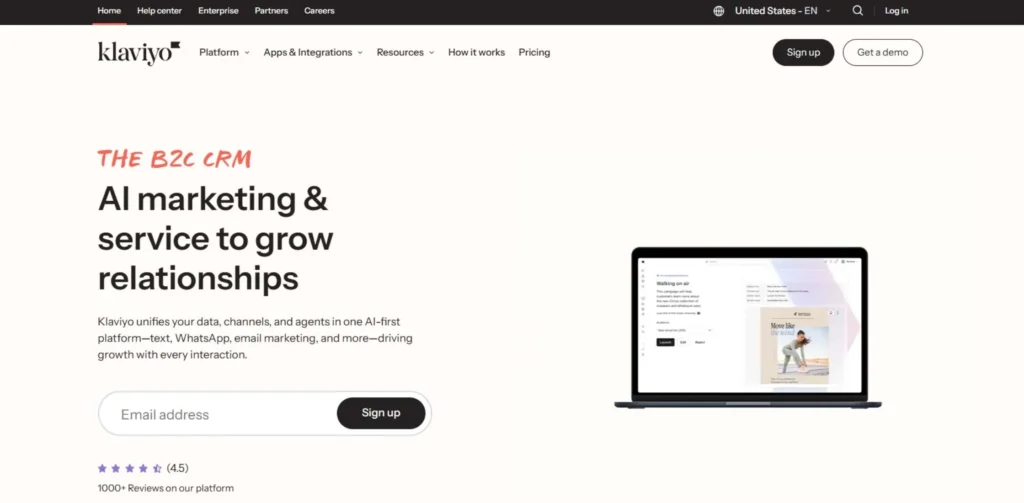
Klaviyo is one of the strongest email and SMS marketing tools that are specifically aimed at e-commerce companies. Having advanced automation and a profound connection with leading e-commerce platforms, it has high segmentation and personalization functionality. The platform does a great job in developing data-based cart recovery campaigns that seem to be personal and timely. The predictive analytics offered by Klaviyo assist a company in identifying the carts which are most likely to be converted so that the company can allocate its resources strategically and recover the most out of the resources.
Key Features:
- High level of customer segmentation.
- Futuristic predictive analytics dashboard.
- Workflows Multi-channel automation.
- Engine of dynamic personalization.
Pros:
- Superior e-commerce assimilations.
- Great segmentation facilities.
- In-depth analytics reporting.
Cons:
- Steeper learning curve
- Premium pricing structure
- Complex for beginners
Pricing:
- Free account: 250 contacts and 500 email transmissions.
- Email strategy: 10 contacts: $20/month
- Email & SMS package: Beginning with $35/month.
- Pricing varies with the size of contact list.
Website: klaviyo.com
2. Omnisend
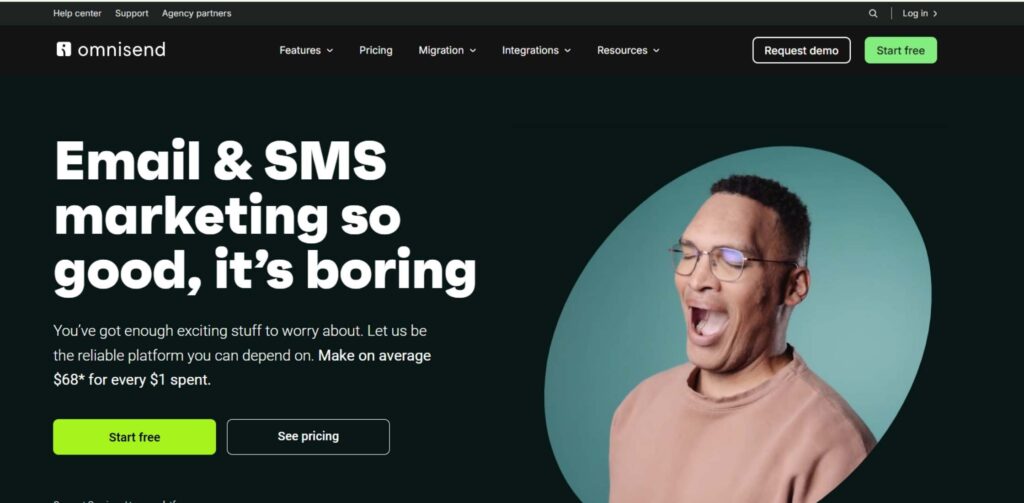
Omnisend provides a genuinely omnichannel solution to Shopping Cart Abandonment Software, using email coupled with SMS and push notifications and even social media retargeting as single-use campaigns. The platform also has a ready-made automation pipeline that is specifically created to recover carts, as a result, businesses can easily start efficient campaigns within a short duration of time. Its user-friendly interface and drag-and-drop workflow developer allow simple automation to be made available to any type of marketer regardless of length of skills, and advanced features to please the expert user.
Key Features:
- The omnichannel campaign builder.
- Ready-made automation processes.
- Recommendation engine of products.
- Developed reporting dashboard.
Pros:
- However, it has a user-friendly interface design.
- Superior automation templates.
- Well-built omnichannel strengths.
Cons:
- Limited free plan
- SMS costs extra
- Support response times
Pricing:
- Free: 250 contacts and 500 emails / month.
- Standard: Starting at $16/month
- Pro: Starting at $59/month
- Enterprise price options offered.
Website: omnisend.com
3. Rejoiner
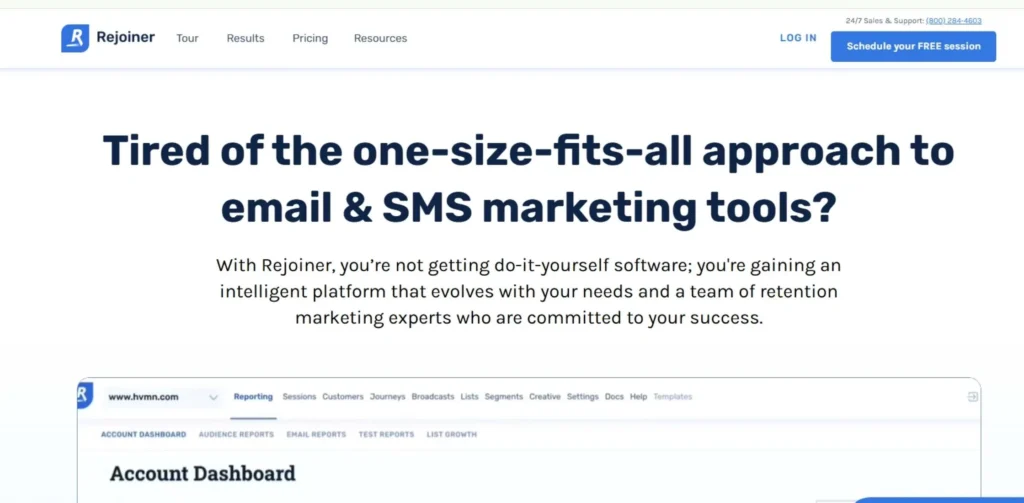
Rejoiner has specialized in cart and browse abandonment recovery, which makes it a niche player in e-commerce email marketing. The laser focus of the platform on abandonment recovery implies that each feature becomes focused on this purpose. Rejoiner provides a high-tech dynamic product feed through which emails automatically fill in with the precise items that customers have forgotten about, as well as smart cross-sell suggestions. The high level of personalization in the platform enables businesses to develop extremely specific recovery campaigns depending on their customer behavior, purchasing history and cart value.
Key Features:
- Dynamic product feed
- Email personalization at the advanced level.
- Anthropological rescue operations.
- Targeting system Behavioural.
Pros:
- Cart recovery specialist
- Good deliverability rates.
- High levels of personalization.
Cons:
- Email-only focus
- Higher price point
- Limited marketing features
Pricing:
- Email-based custom pricing.
- Normally begins at a minimum of $500/month.
- Enterprise plans available
- Direct sales with regard to specific quotes.
Website: rejoiner.com
4. Privy
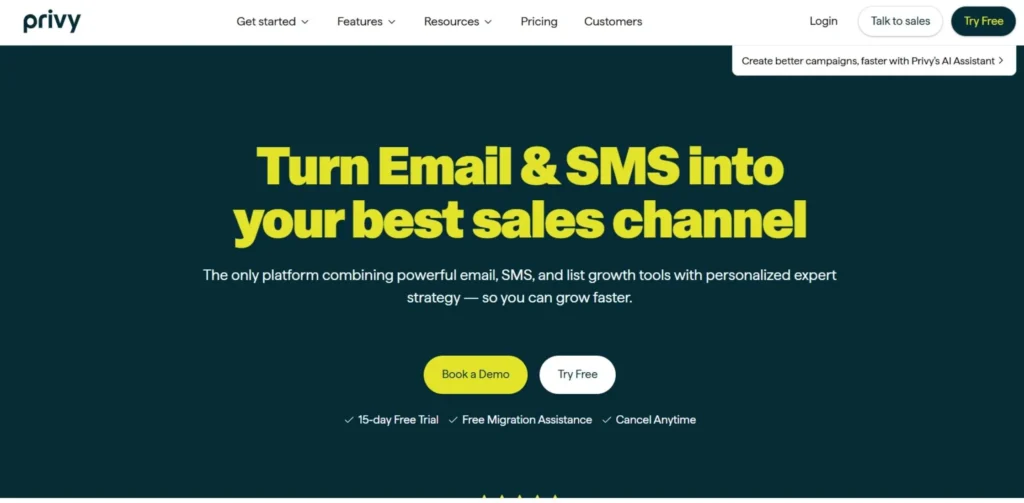
Privy is a single cart abandonment recovery/conversion optimization product. Privy is well-known with its exit-intent technology, which captures the attention of visitors and presents them with special offers or email capture forms before they go. The website has a high propensity in amassing email lists besides recuperating cart abandonment via automated advertising campaigns. The calculable pricing and easily accessible interface of Privy also makes it especially appealing to growing e-commerce companies, which are not at the point where they require something as professional in their operations and as investment-heavy as enterprise software.
Key Features:
- Exit-intent pop up technology.
- Email list growth tools
- Cart saver campaigns
- Spin-to-win gamification
Pros:
- Easy to implement
- Affordable pricing tiers
- Great for beginners
Cons:
- Limited SMS features
- Basic reporting tools
- Can slow site speed
Pricing:
- Free plan: 100 mailable contacts reimbursement is permitted.
- Starter: $30/month (up to 1,500 contacts)
- Growth: $45/month (up to 2,500 contacts)
- The prices grow as the contacts grow.
Website: privy.com
5. Recart
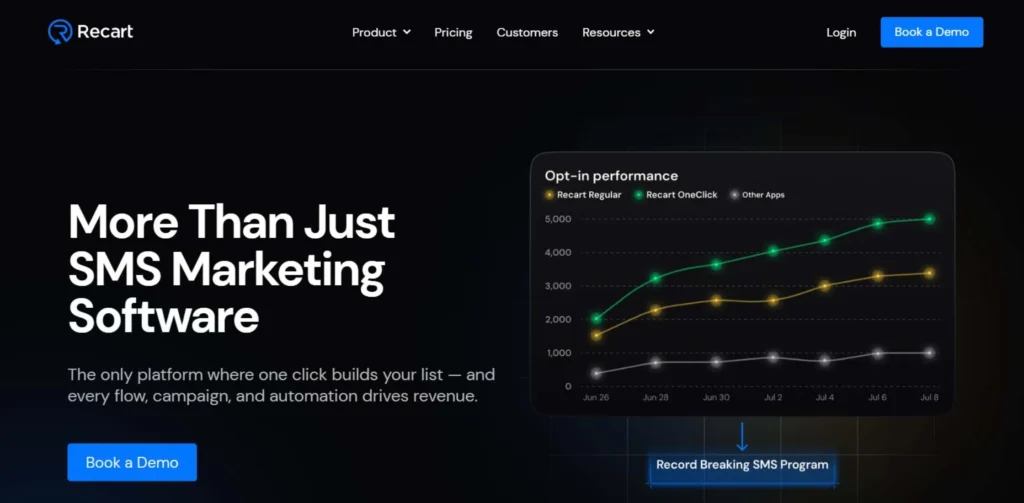
Recart has established itself as the best SMS-oriented Shopping Cart Abandonment Software, understanding that text messaging has much higher rates of openness than email, which is often more than 98% in a few minutes. The platform enables easy recovery of SMS carts by making it complying and automatic, by taking all the hassles of SMS marketing rules and regulation. The conversational nature of SMS marketing used by Recart is not pushy but natural and the two-sided messages enable the customers to question or seek help directly by sending text messages, which will make them in the customized personal shopping service.
Key Features:
- SMS cart recovery
- Two-way text conversations
- Subscriber list building
- Messenger integration alternatives.
Pros:
- High SMS engagement
- Easy Shopify integration
- Market orientation on conversation.
Cons:
- Primarily SMS-focused
- Limited email features
- Shopify-centric platform
Pricing:
- Free plan: Up to 250 contacts
- Growth plan: beginning with $299/month.
- Scale plan: Custom pricing
- Pricing structure is available as a pay-per-message.
Website: recart.com
6. CartStack
CartStack is an application based on exit-intent technology, which implies catching visiting customers at the point of their exit and providing them with strong incentives to wait. Real time abandonment identification at the platform leads to instant recovery measures, which involve on site popups and email follow ups to cover all aspects of coverage. The exceptional strategy of CartStack is its emphasis on preventing abandonment before it occurs and carts that are abandoned as well. Analytics on the platform give a clear picture of the abandonment trends, and recovery performance in each of the customer groups.
Key Features:
- Real-time exit detection
- On-site abandonment offers
- Email recovery campaigns
- Device-specific optimization
Pros:
- Institutions’ response to immediate abandonment.
- Strong analytics dashboard
- Multi-device support
Cons:
- Can seem aggressive
- Learning curve exists
- Low level of customization.
Pricing:
- Starter: $300/month
- Professional: $500/month
- Enterprise: Custom pricing
- Unlimited emails are available in all the plans.
Website: cartstack.com
7. Retainful
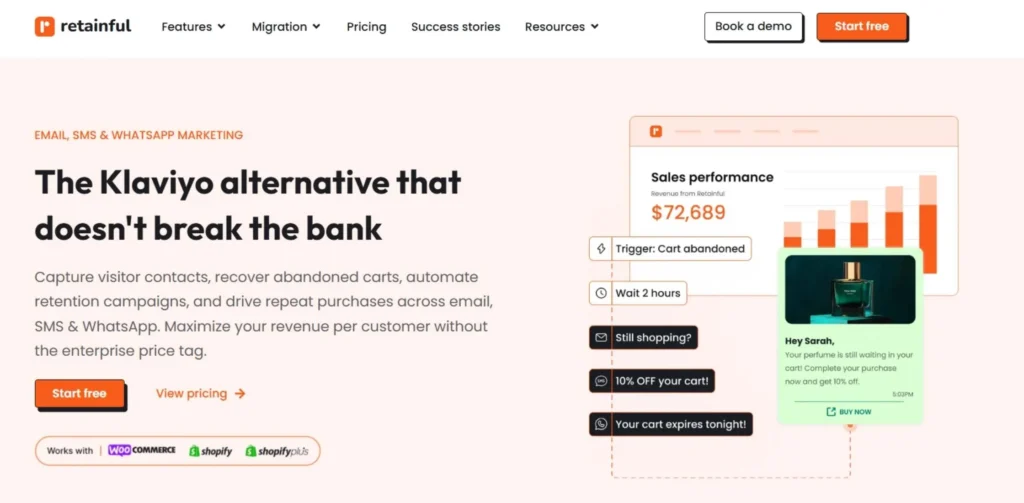
Retainful has a comprehensive strategy on customer retention, integrating cart recovery with recovery and next-order incentives and referrals. This Shopping Cart Abandonment Software understands that getting a customer back is only the start of the customer contact. The system automatically contains the discounted codes in future transactions in recovery emails, which helps customers become frequent customers and the current problem of abandonment is addressed. The referral program of Retainful will convert happy clients into brand ambassadors, which will promote a virtuous cycle of customer acquisition and customer retention, thus making the most of the customer lifetime value.
Key Features:
- Cart recovery automation
- Next order coupons
- Referral programs administration.
- WooCommerce & Shopify integration.
Pros:
- One-stop retention system.
- Low cost pricing system.
- Focus on repeat purchases
Cons:
- Newer platform option
- Restricted business characteristics.
- Smaller user community
Pricing:
- Free plan: Up to 300 contacts
- Starter: $19/month (up to 500 contacts)
- Growth: $49/month (up to 2,000 contacts)
- Professional: 99/month (unto 5,000 contacts)
Website: retainful.com
8. ActiveCampaign
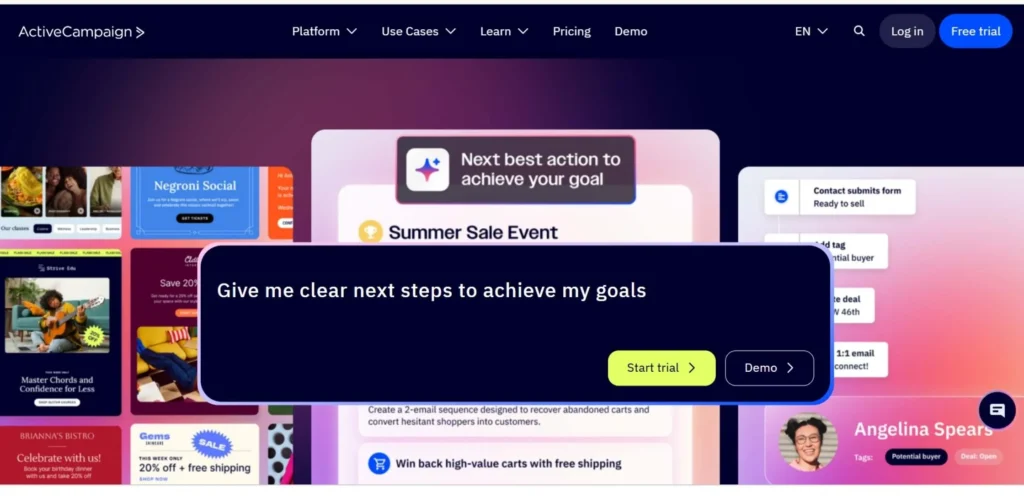
ActiveCampaign is an email marketing service that has an excellent CRM application embedded into it, it is one which can be considered a viable choice by any business that requires built-in customer relationship management, as well as cart recovery. The advanced automation designer makes possible the construction of multifaceted, many step recovery procedures, depending on customer actions and interactions. The machine learning features of ActiveCampaign forecast customer behaviors and automatically optimize the time to send. The platform is also very strong in terms of targeting recovery campaigns that are highly targeted, i.e. micro-targeted, based on purchase record, browsing history and customer lifecycle stage, and thus is most effective.
Key Features:
- The use of sophisticated marketing automation.
- Integrated CRM system
- Optimization of predictive sending.
- Lead scoring capabilities
Pros:
- Extensive automation characteristics.
- Excellent CRM integration
- Good deliverability rates.
Cons:
- Steeper learning curve
- Can be overwhelming
- Pricing in a higher tier was necessary.
Pricing:
- Lite: The basic cost is starting at 29/month (1,000 contacts)
- Plus: Starting at $49/month
- Professional: Beginning with $149/month.
- Enterprise: Individual pricing offered.
Website: activecampaign.com
9. Barilliance
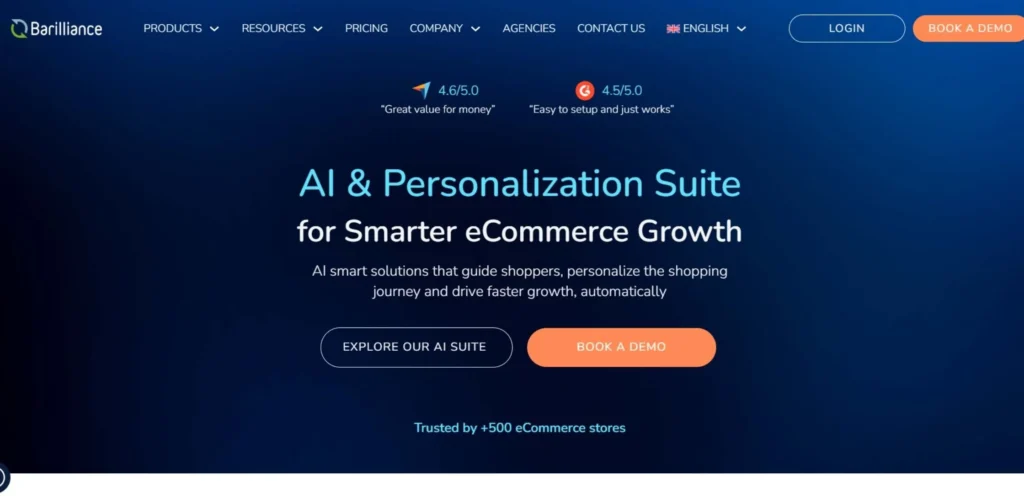
Barilliance is an enterprise level personalization platform that offers an advanced cart cart abandonment recovery as a feature in the package. This platform is very good in behavioral targeting whereby real-time data about the customers is used to design very personalized shopping experiences. The email recovery campaigns by Barilliance have features of using intelligent product suggestions, which rely on shopping history, buying habits, etc. customer behaviours. The machine learning algorithms of the platform keep optimizing the personalization strategies, and the progress of personalization in terms of recovery rates improves with time as the system comes to know what is most effective to various groups of customers.
Key Features:
- Behavioral personalization engine.
- Email cart recovery
- Recommendation system of products.
- On-site segmentation applications.
Pros:
- Enterprise-grade features
- High-range personalization features.
- All-embracing data analytics.
Cons:
- Complicated implementation procedure.
- Higher price point
- I need technical expertise.
Pricing:
- Traffic-based custom pricing.
- Usually begins with approximately $500/month.
- Packages of enterprise offerings.
- Contact for specific quotes
Website: barilliance.com
10. Adoric
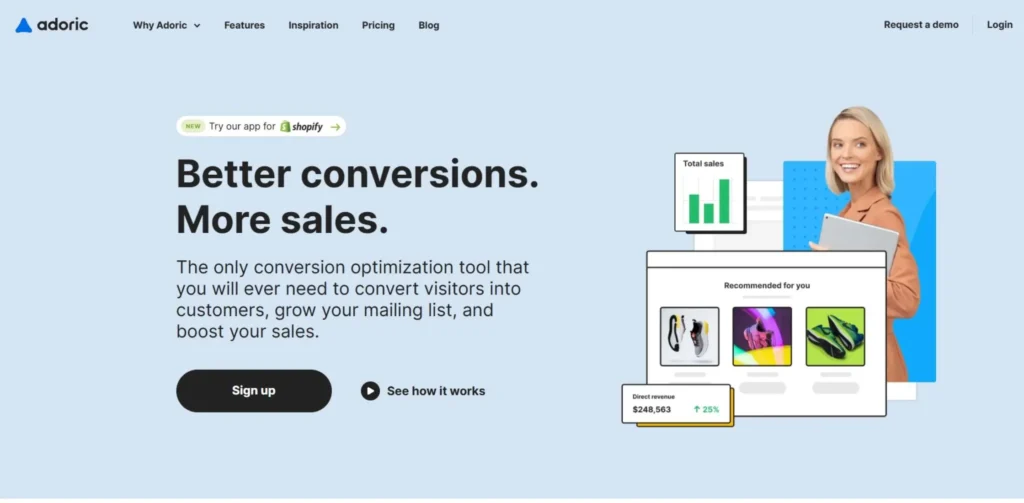
Adoric is an all-in-one conversion optimization engine allowing Shopping Cart Abandonment Software to be affordable to any business. The platform integrates cart recovery automation, exit-intent detection, popup technology and email capture, all on one platform. Cart recovery is gamified to be fun and engaging as opposed to being transactional through spin-to-win wheels and scratch cards that can be used by Adoric. The site is very friendly and has a low price, which makes it especially appealing to small businesses and startups that require the services of a professional recovery tool without spending too much.
Key Features:
- Multi-type popup builder
- Do the integration of an exit-intent technology.
- Elements of gamification involved.
- Email automation workflows
Pros:
- Low-cost pricing plan.
- Easy to use
- Fast implementation process.
Cons:
- Limited advanced features
- Less diverse integration eco-system.
- Basic analytics tools
Pricing:
- Free: Simple services, 5000 views per month.
- Basic: $19/month (50,000 views)
- Business: $49/month (150,000 views)
- Agency: $99/month (500,000 views)
Website: adoric.com
How Shopping Cart Abandonment Software Works
- Pixel Tracking: Pixel Tracking: This software adds a tracking pixel or JavaScript code to your site, which helps to track visitor actions, goods added to carts, and cart check.
- Identity Resolution: The system captures identifying information in the form of a customer accessing your site; either through the use of a form, account access, or cookie to facilitate the occurrence of a follow-up correspondence.
- Settings: Triggers administrators configure automated trigger policies specifying timings of launching recovery campaigns, messages to send, incentives to provide due to the cart value or customer segment.
- Campaign Execution: Triggers: Once the triggers are activated, the system will automatically deliver personalized recovery messages along the set channels usually in stages with a growing level of urgency or improved deals.
- Response Tracking: The software follows the customer response, email clicks, links clicks and purchase to determine the effectiveness of the campaign and determine the ROI accurately.
- Constant Optimization: Machine learning algorithms use performance metrics/data to suggest timing changes, message changes, and result incentive-based models, which are tested to automatically and automatically work at optimizing the recovery rates over time.
How to Solve Shopping Cart Abandonment
- Make Checkout Easy: Minimize the number of steps involved to make a purchase, minimize the required form fields, and provide guests with the option of checkout to minimize the friction points.
- Post Signals: Display security logos, buyer feedback, money-away guarantees, and obvious refund policies in a place of honor so as to alleviate fears of purchase and create consumer trust.
- Clear Pricing: Disclose all expenses such as shipping, taxes and charges at the very start, even before the process of checkout actually triggers unexpected cost that usually leads to order abandonment at the point of payment.
- Mobile-Optimize: Choose the appropriate mobile optimization: optimize the entire checkout process to be perfectly compatible with smartphones and large-button tablets, including automatic filling out as well as mobile payment functionality.
- Provide a Variety of Choices: Add credit cards, PayPal, Apple Pay, Google Pay, and buyer-now-pay-later solutions to the list of the most widespread payment system options and enable customers to make their choice.
- Conduct Recovery Campaigns: Recovery software may also be installed and customers who abandon their carts are contacted automatically via the software that provides targeted services in the form of assistance, clarification of their questions or incentive offers to buy.
Shopping Cart Software vs Abandonment Software – Table
| Feature | Regular Shopping Cart Software | Abandonment Recovery Software |
| Primary Purpose | Facilitate product selection and checkout process | Recover lost sales from incomplete purchases |
| Core Functionality | Product display, cart management, payment processing | Behavioral tracking, automated follow-up campaigns, analytics |
| User Interaction | Active customer browsing and purchasing | Automated outreach after customer leaves |
| Integration Points | Payment gateways, inventory systems, shipping | Email/SMS platforms, CRM systems, analytics tools |
| Data Focus | Product information, pricing, inventory levels | Customer behavior, abandonment patterns, recovery rates |
| Automation Level | Manual customer-driven process | Fully automated trigger-based campaigns |
| Primary Metric | Conversion rate, average order value | Recovery rate, revenue recovered, ROI |
| Timing | Real-time during shopping session | Post-abandonment over hours/days |
| Personalization | Product recommendations, saved preferences | Behavioral targeting, dynamic content, incentive optimization |
| Communication | On-site only during session | Multi-channel follow-up (email, SMS, push, retargeting) |
Conclusion
Shopping Cart Abandonment Software is among the most ROI investments that an e-commerce business can undertake in 2026. As online shopping carts have steadily brought potentially huge revenue losses to online stores globally, the deployment of the appropriate recovery tool is not only a brilliant idea, but the survival of any business in the competitive arena. The top ten platforms covered in this review have either distinct advantages, such as Klaviyo with its full marketing automation or Recart with its SMS-centered strategy and reliance on affordability (adored by Adoric).
The trick is to choose the software that will conform to your business size, technical functionality, financial limitations, and customer demands. Using Shopping Cart Abandonment Software and adhering to the best practices in terms of optimizing the checkout processes allows companies to retrieve an impressive amount of revenue at the same time ensuring a holistic customer experience and acquiring meaningful insights into the shopping habits.
FAQs
What is the mean rate of cart abandonment with e-commerce outlets?
The mean cart abandonment variation by the categories amounts to about 69.8% though again by sector one can find a variation of higher cart abandonment in the fashion industry (ranging to 75% on average) and lower rates of cart abandonment of about 60 percent in the digital goods industry.
How fast are the cart abandonment emails?
The initial recovery email must be dispatched in 1-3 hours after being abandoned when the mind is still fresh. Send follow-up emails at 24 and 48-72 hours respondent maximum recovery rates.
Do the emails on cart abandonment actually work?
Yes, cart abandonment emails have an average open rate of 40-45 percent and can convert 10-30 percent of carts abandoned, which is among the best performing forms of emails in e-commerce marketing.
Is it advisable to include a discount in cart recovery emails?
Not always immediately. The useful reminders should always be sent on the initial test runs, and then discounts given on subsequent sequences. High-value carts Aggressive discounts should be assigned to reserve carts to secure margins and recover maximally.
Does Shopping Cart Abandonment Software apply to any e-commerce site?
A majority of large abandonment recovery solutions are compatible with some of the most popular abandonment recovery software Systems such as Shopify, WooCommerce, Magento and BigCommerce, but not all have the same potential to integrate, so it is best to check compatibility before buying.