As companies grow, managing sales activities becomes increasingly complex. Sales teams often spend valuable time filling out forms, following up with leads, scheduling meetings, and updating customer records instead of focusing on closing deals. This is where the best tools for sales automation make a significant difference.
Today’s sales automation software helps businesses automate repetitive tasks, streamline lead management, improve customer engagement, and boost overall productivity. Many modern platforms also leverage artificial intelligence, advanced analytics, workflow automation, and seamless integrations to help sales teams work more efficiently and close more deals.
With so many platforms available, choosing the right solution can be challenging. In this guide, we’ll explore the top sales automation software of 2026, compare their key features, and help you find the ideal platform to streamline your sales process and achieve your business goals.
What is Sales Automation?
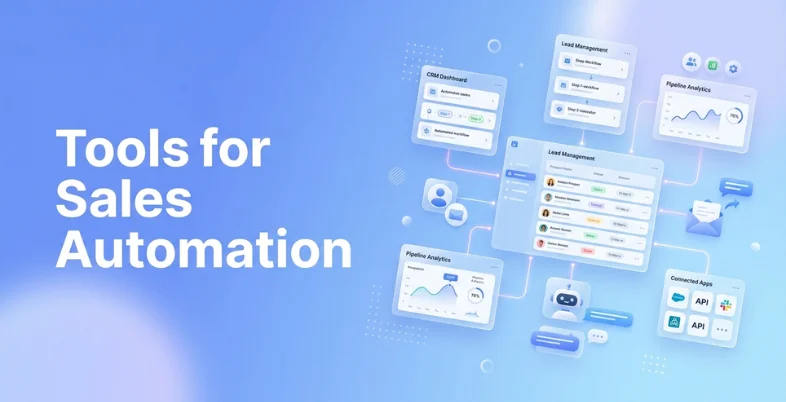
Sales automation is the practice of using software to automate usual sales processes like lead management, follow-up email messages, contact updates, meeting scheduling, pipeline tracking, and reporting. It enables sales departments to minimize manual effort and boost productivity, ensure effective communication, and prioritize relationship-building and closing. Its ability to automate routine tasks helps businesses improve their productivity and boost their revenue growth.
Why Your Business Needs Sales Automation in 2026
Customer expectations are continually changing, making sales processes more complex. Today, businesses have more leads to handle, more channels to communicate with, and more extended buying cycles. Automating sales processes makes it easier for sales teams to remain organized, efficient, and provide a better customer experience.
- Increase Sales Team Productivity: There is time spent entering information into the system, creating tasks, and following up. These repetitive tasks are automated, giving representatives time to prospect and close sales.
- Improve Lead Management: Sales automation software can automatically gather, categorize, and prioritize leads. This will enable you to direct the high-potential prospects at the right time.
- Enhance Customer Engagement: Email automation, reminders, and personalized follow-ups ensure regular communication at every stage of the sales process without the need for constant manual work.
- Reduce Human Errors: Automation reduces the chance of human error. Contact records, activity logs, and pipeline updates are accurate and up to date.
- Support Business Growth: With growing sales operations, automation allows sales teams to deal with additional workloads without added administrative strain.
- Improve Response Times: Responses that happen quickly can make a big difference in conversions. Automated workflows make sure leads are contacted and followed up on in a timely manner.
Key Features to Look for in Sales Automation Software
Not all sales automation platforms have the same features. Prior to investing in the solution, assess the features that will affect your sales and growth the most.
- Lead Management: The ideal platform should be able to capture, organize, and track leads from a variety of sources automatically, and assist teams to effectively prioritize opportunities.
- Workflow Automation: The repetitive follow-up, reminder, task assignment, and status update tasks should be streamlined using automation tools to increase efficiency.
- Email Automation: Integrated email automation features enable sales teams to craft customized email campaigns, set schedules, and track email performance.
- AI-Powered Insights: AI can assist in spotting potential opportunities, recommending next steps, and aiding in predictive analytics for decision-making.
- Pipeline Management: Visual Pipeline Tracking helps teams see deals, understand the bottlenecks, and control sales activities effectively.
- Integration Capabilities: The platform should integrate seamlessly with CRM, marketing trend, communication, and other business software.
Comparison of Sales Automation Tools
| Tool | Best For | AI Features | Free Plan | Starting Price |
| Salesforce Sales Cloud | Enterprises | Advanced AI | No | $25/user/month |
| HubSpot Sales Hub | Growing Businesses | Yes | Yes | $20/user/month |
| Zoho CRM | Small to Mid-Sized Businesses | Yes | Yes | $14/user/month |
| Pipedrive | Sales Pipeline Management | Yes | No | $14/user/month |
| Freshsales | AI-Powered Selling | Yes | Yes | $9/user/month |
| Monday Sales CRM | Team Collaboration | Yes | Yes | $12/user/month |
| Close CRM | Inside Sales Teams | Limited AI | No | $9/user/month |
| Copper CRM | Google Workspace Users | Limited AI | No | $9/user/month |
| Apollo.io | Lead Generation & Outreach | Yes | Yes | $23/user/month |
| Outreach | Enterprise Sales Engagement | Advanced AI | No | $100/user/month |
List of Best Sales Automation Tools
1. Salesforce Sales Cloud
- Rating 4.4/5
- Website: salesforce.com
- Best For: Large enterprises managing complex sales operations across multiple teams.
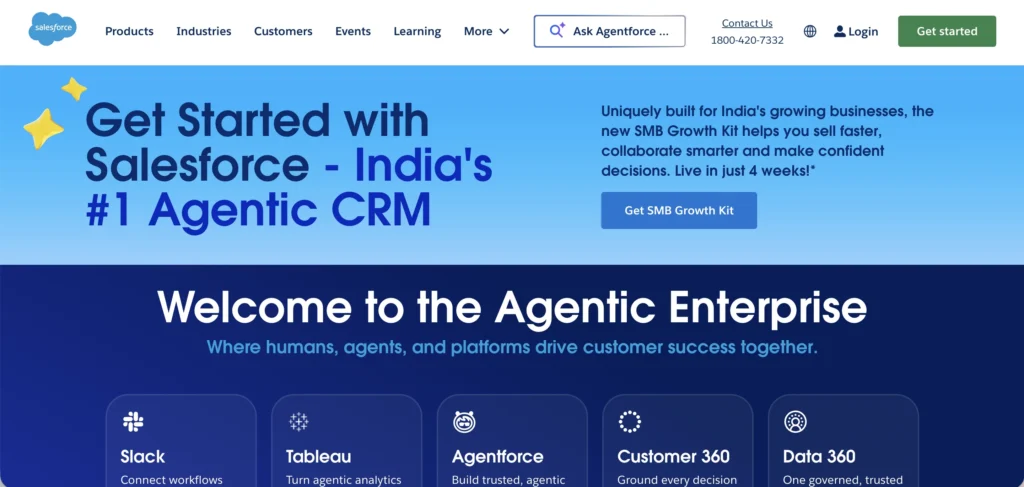
Salesforce Sales Cloud is one of the best tools for sales automation and one of the oldest sales automation platforms in the market. It combines CRM, workflow automation, artificial intelligence, analytics, and pipeline management into a single platform. Businesses can automate lead allocation, opportunity tracking, sales forecasting, and customer engagement while maintaining complete visibility across the sales process.
The platform’s extensive customization options and wide range of integrations make it especially valuable for organizations managing high-volume sales operations. Thanks to its advanced AI capabilities and enterprise-grade features, Salesforce remains a top choice for businesses looking to scale their sales efforts efficiently.
Key Features:
- AI-powered sales insights
- Automated lead management
- Opportunity tracking
- Advanced reporting dashboards
- Workflow automation tools
Pros:
- Highly scalable platform
- Extensive customization capabilities
- Powerful reporting functionality
- Strong integration ecosystem
- Advanced AI features
Cons:
- Higher learning curve
- Expensive for smaller businesses
- Implementation can be complex
- Additional features may increase costs
- Requires proper onboarding
Pricing:
| Plan | Pricing |
| Starter Suite | $25/user/month |
| Pro Suite | $100/user/month |
| Enterprise | $175/user/month |
| Unlimited | $350/user/month |
| Agentforce 1 Sales | $550/user/month |
Why Choose Salesforce Sales Cloud?
Salesforce offers one of the most comprehensive sales automation environments available. Businesses that require advanced customization, analytics, AI-driven insights, and enterprise scalability often choose Salesforce over competing solutions.
2. HubSpot Sales Hub
- Rating 4.5/5
- Website: hubspot.com
- Best For: Growing businesses looking for an easy-to-use sales automation platform.
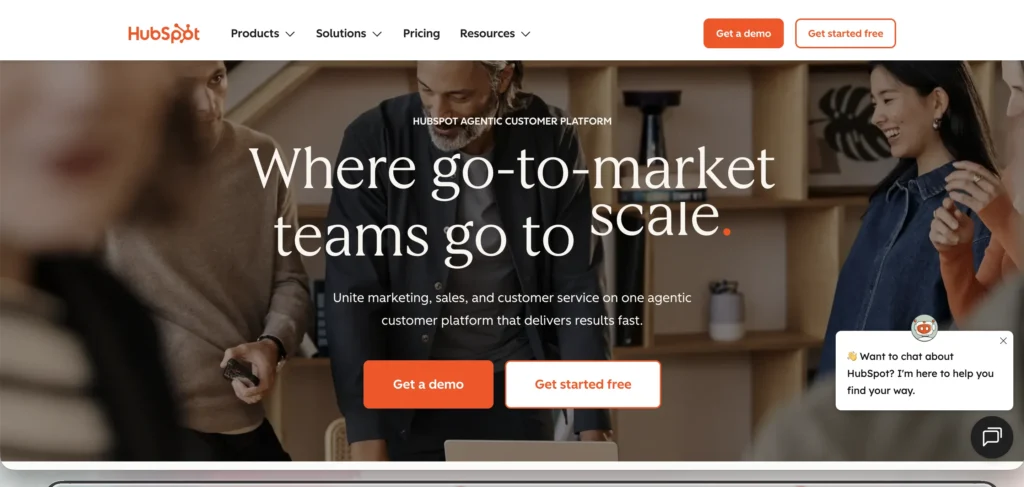
HubSpot Sales Hub brings together CRM, sales automation, email tracking, appointment scheduling, and pipeline management functionalities in an intuitive UI. This platform is aimed at automating manual sales processes and gaining insights into customers’ behavior and deal management.
Thanks to its user-friendliness, the platform allows teams to automate their sales processes easily without requiring much technical know-how on the part of the users. Businesses can automate outreach, manage contacts, track conversations, and generate reports from a centralized workspace.
Key Features:
- Automated email sequences
- Meeting scheduling tools
- Pipeline management
- Sales analytics dashboard
- AI-powered assistance
Pros:
- Easy to implement
- User-friendly interface
- Strong CRM functionality
- Helpful reporting tools
- Free plan available
Cons:
- Advanced features require higher plans
- Costs increase as teams grow
- Some customization limitations
- Enterprise features are expensive
- Reporting varies by plan
Pricing:
| Plan | Pricing |
| Free | $0 |
| Starter | $20/user/month |
| Professional | $100/user/month |
| Enterprise | $150/user/month |
Why Choose HubSpot Sales Hub?
HubSpot provides a strong balance between functionality and ease of use. Businesses seeking sales automation without the complexity often find it easier to adopt than many enterprise-focused platforms.
3. Zoho CRM
- Rating 4.5/5
- Website: zoho.com/crm
- Best For: Small and mid-sized businesses seeking affordable sales automation.
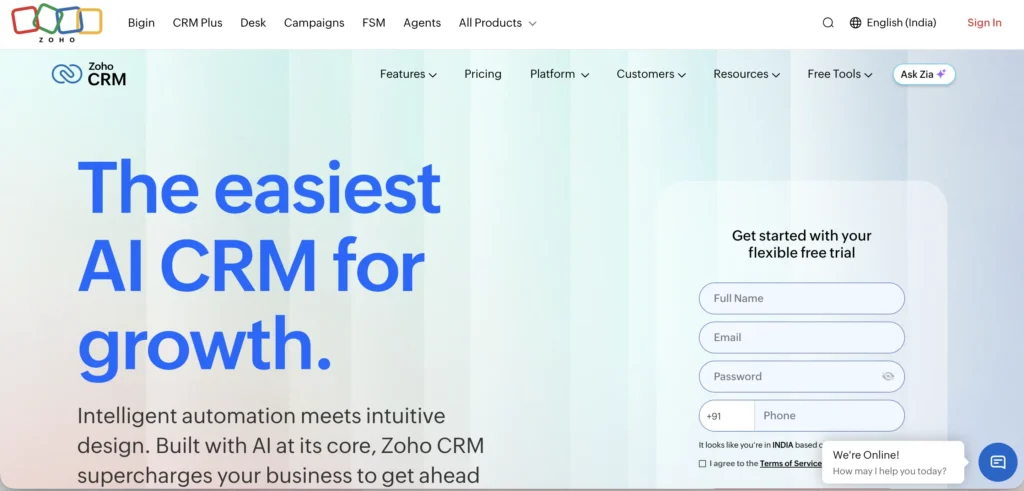
Zoho CRM is one of the best tools for sales automation, offering a wide range of features for managing leads, streamlining workflows, tracking customer interactions, and improving sales efficiency. Its affordability and comprehensive feature set make it a popular choice for businesses seeking powerful functionality without a high price tag.
With an AI-powered assistant, workflow automation, and extensive customization options, Zoho CRM helps organizations boost productivity while adapting easily to changing sales processes and business requirements.
Key Features:
- Lead nurturing and contact automation
- AI-powered sales assistant
- Workflow management
- Sales forecasting
- Omnichannel communication
Pros:
- Competitive pricing
- Strong customization options
- Broad feature availability
- AI-powered assistance
- Scalable platform
Cons:
- Interface can feel crowded
- Advanced setup requires effort
- Learning curve for new users
- Some integrations require configuration
- Support quality varies by plan
Pricing:
| Plan | Pricing |
| Free | $0 |
| Standard | $14 / $20/user/month |
| Professional | $23 / $35/user/month |
| Enterprise | $40 / $52 /user/month |
| Ultimate | $52 / $65 /user/month |
Why Choose Zoho CRM?
Zoho CRM delivers an impressive combination of affordability, automation, and customization, making it an excellent option for businesses seeking strong value from their sales software.
4. Pipedrive
- Rating 4.5/5
- Website: pipedrive.com
- Best For: Sales teams that need clear pipeline visibility and deal tracking.
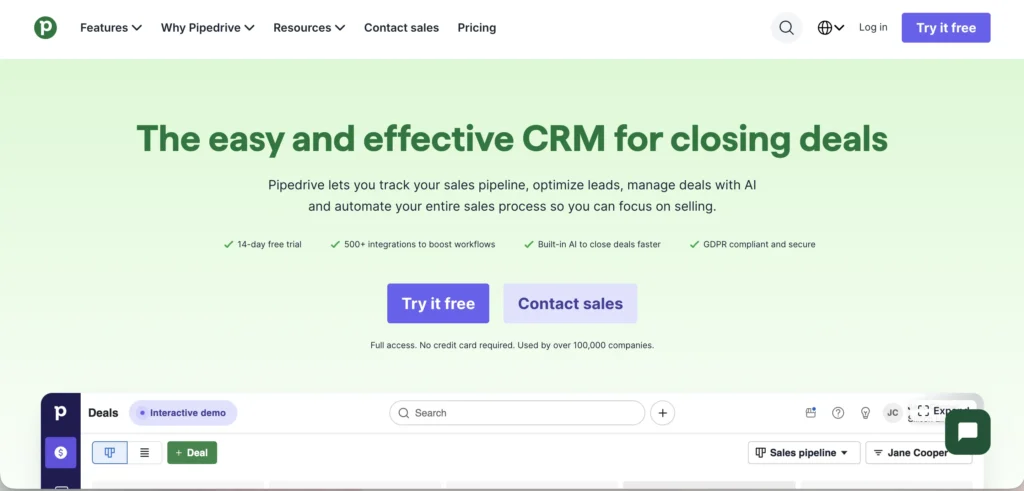
Pipedrive is a sales-oriented CRM software that can help companies manage opportunities more efficiently. Visual representation of deals and progress in the pipeline makes it possible for companies to observe ongoing business activities and detect the actions that need to be taken. Routine actions such as follow-ups, reminders, lead assignment, etc. are automated, allowing sales representatives to focus on selling rather than administration.
With a clean interface and straightforward setup process, Pipedrive is particularly popular among small businesses and mid-sized businesses looking for an automation platform that is both practical and easy to manage.
Key Features:
- Visual sales pipeline
- Workflow automation
- Email tracking tools
- Activity management
- AI-powered sales insights
Pros:
- Easy-to-use interface
- Strong pipeline visibility
- Quick implementation process
- Effective activity tracking
- Useful automation templates
Cons:
- Limited marketing features
- Advanced reporting requires higher plans
- Some integrations cost extra
- Enterprise functionality is limited
- Customizations have restrictions
Pricing:
| Plan | Pricing |
| Lite | $14/user/month |
| Advanced | $39/user/month |
| Premium | $49 to $59/user/month |
| Ultimate | $79/user/month |
| Enterprise | $99/user/month |
Why Choose Pipedrive?
Pipedrive is ideal for teams that prioritize deal management and pipeline visibility. Its intuitive design makes sales tracking significantly easier without adding unnecessary complexity.
Suggested Read:
5. Freshsales
- Rating 4.5/5
- Website: freshworks.com/crm
- Best For: Businesses looking for AI-powered sales automation at an affordable price.
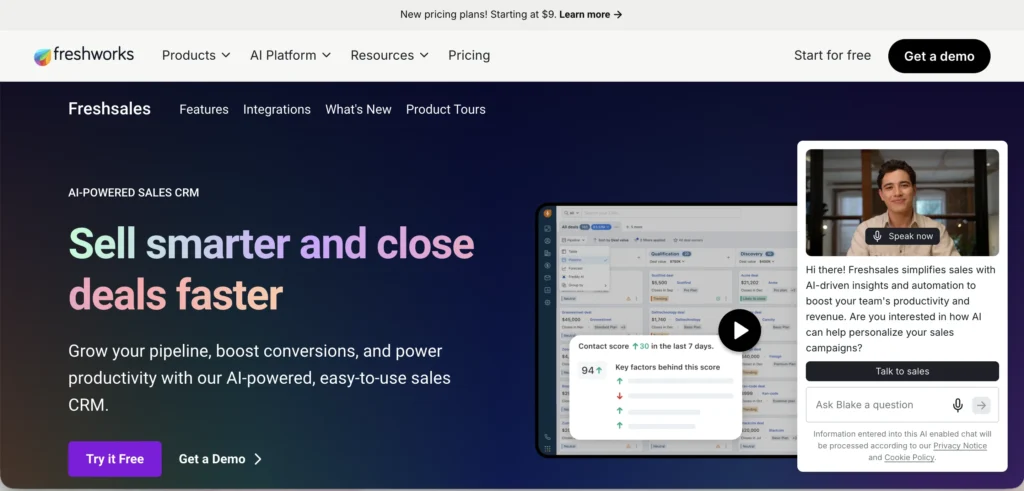
Freshsales is one of the best tools for sales automation, combining CRM, lead management, communication tools, and artificial intelligence into a single platform. It helps businesses automate repetitive tasks while providing valuable insights through its AI-powered assistant. Companies can manage contacts, schedule follow-ups, track conversations, and monitor deals from one centralized system.
One of Freshsales’ biggest advantages is its affordability, making it an excellent choice for growing businesses that need advanced sales automation features without the high cost.
Key Features:
- AI-powered lead scoring
- Built-in communication tools
- Workflow automation
- Contact lifecycle tracking
- Sales forecasting
Pros:
- Affordable pricing structure
- Integrated phone and email tools
- AI-assisted selling features
- Simple user experience
- Strong lead management capabilities
Cons:
- Reporting options vary by plan
- Advanced features require upgrades
- Limited customization in lower tiers
- Smaller integration library
- Some automation limits apply
Pricing:
| Plan | Pricing |
| Free | $0 |
| Growth | $9/user/month |
| Pro | $39/user/month |
| Enterprise | $59/user/month |
Why Choose Freshsales?
Freshsales delivers strong automation and AI functionality at a competitive price point, making it a valuable option for businesses focused on growth.
6. Monday Sales CRM
- Rating 4.6/5
- Website: monday.com
- Best For: Teams that want sales automation combined with strong collaboration features.
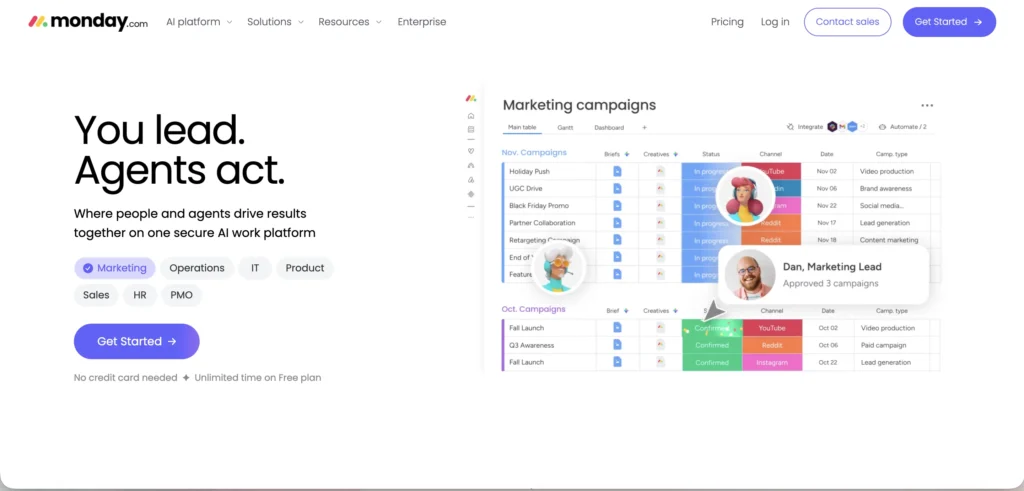
Monday Sales CRM helps businesses manage leads, sales activities, customer engagements, and workflow management through an extremely visual workspace. Monday Sales CRM merges the CRM function with project management, where businesses will be able to collaborate better while getting a full view of the entire sales activity.
The customizable platform allows businesses to tailor workflows to suit their needs, making it suitable for organizations that need both sales management and operational coordination within a single platform.
Key Features:
- Custom sales pipelines
- Workflow automation
- Team collaboration tools
- AI-powered assistance
- Performance dashboards
Pros:
- Highly customizable interface
- Easy team collaboration
- Visual workflow management
- Flexible automation capabilities
- Modern user experience
Cons:
- Feature availability depends on plan
- Advanced reporting requires upgrades
- Learning curve for customization
- Costs increase with team size
- Some integrations require setup
Pricing:
| Plan | Pricing |
| Free | $0 |
| Basic | $12/user/month |
| Standard | $17/user/month |
| Pro | $28/user/month |
| Enterprise | Custom Pricing |
Why Choose Monday Sales CRM?
Monday Sales CRM combines sales automation with collaboration tools, making it a strong choice for teams that want better visibility and coordination across departments.
7. Close CRM
- Rating 4.7/5
- Website: close.com
- Best For: Inside sales teams focused on outreach and communication.
Close CRM is one of the best tools for sales automation for sales teams that communicate frequently with prospects. It combines calling, email, SMS, and workflow automation into a single platform, making it easier to manage conversations and maintain consistent follow-ups.
Unlike many other CRM solutions, Close CRM focuses less on extensive customization and more on boosting productivity and communication efficiency. This makes it an ideal choice for sales-driven businesses where outbound outreach and relationship building are top priorities.
Key Features:
- Built-in calling platform
- Email automation
- SMS communication tools
- Lead management
- Workflow automation
Pros:
- Strong communication features
- Efficient outreach management
- User-friendly interface
- Fast workflow creation
- Helpful activity tracking
Cons:
- No free plan available
- Limited project management features
- Higher-tier plans can be expensive
- Fewer customization options
- Smaller integration ecosystem
Pricing:
| Plan | Pricing |
| Solo | $9/month (Annual) or $19/month (Monthly) |
| Essentials | $35/month (Annual) or $49/month (Monthly) |
| Growth | $99/month (Annual) or $109/month (Monthly) |
| Scale | $139/month (Annual) or $149/month (Monthly) |
Why Choose Close CRM?
Close CRM is built for sales-focused teams that rely heavily on calls, emails, and outreach activities to generate revenue.
8. Copper CRM
- Rating 4.5/5
- Website: copper.com
- Best For: Businesses that rely heavily on Google Workspace.
Copper CRM works perfectly with Google Workspace, meaning that you will be able to manage your contacts, opportunities, emails, and tasks without switching to another application. Its automation capabilities help streamline sales processes while reducing the need for manual data entry.
Copper CRM is simple and productive, and therefore it is perfect for those companies that need a CRM solution without going through many complicated steps.
Key Features:
- Google Workspace integration
- Workflow automation
- Contact management
- Activity tracking
- Pipeline monitoring
Pros:
- Excellent Google integration
- Easy implementation
- Clean interface
- Minimal learning curve
- Efficient contact management
Cons:
- Limited AI functionality
- Fewer advanced automation features
- Higher plans required for scalability
- Smaller integration marketplace
- Reporting capabilities are basic
Pricing:
| Plan | Pricing |
| Starter | $9/user/month |
| Basic | $23/user/month |
| Professional | $59/user/month |
| Business | $99/user/month |
Why Choose Copper CRM?
Copper CRM is an excellent solution for businesses already using Google Workspace because it provides a familiar environment with strong sales management capabilities.
9. Apollo.io
- Rating 4.7/5
- Website: apollo.io
- Best For: Businesses that need sales automation combined with lead generation and prospecting.
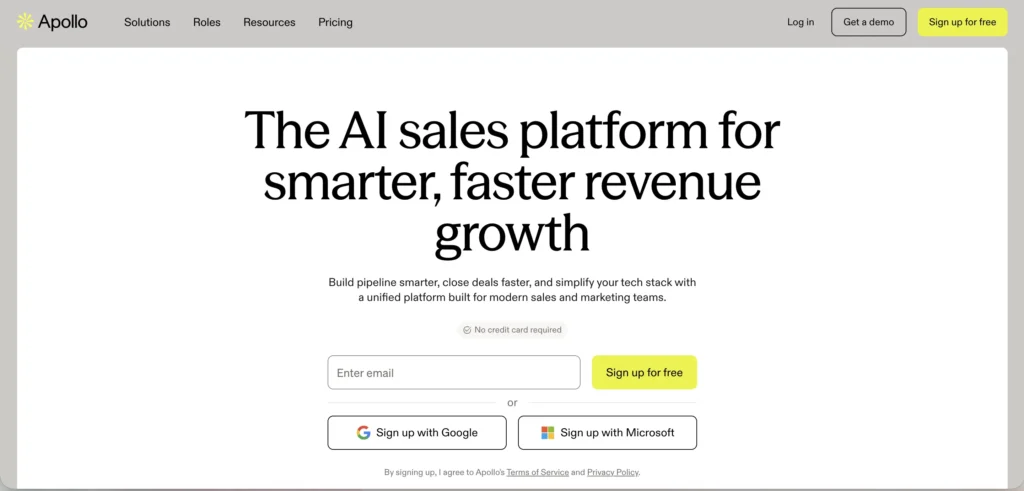
Apollo.io is one of the best tools for sales automation, combining prospecting, outreach, lead management, and automation into a single platform. Businesses can access a vast contact database to identify prospects, automate outreach campaigns, and track customer interactions throughout the entire sales process, eliminating the need for multiple tools.
Its automation capabilities help sales teams streamline repetitive tasks while maintaining personalized communication with prospects. Apollo.io is especially popular among startups, agencies, and sales-focused organizations looking to improve lead generation for New SaaS and sales efficiency.
Key Features:
- B2B contact database
- Automated outreach sequences
- Lead enrichment tools
- AI-powered recommendations
- Sales engagement tracking
Pros:
- Extensive prospect database
- Strong lead generation Solutions
- Easy sequence automation
- Helpful engagement insights
- Competitive pricing
Cons:
- Data accuracy can vary
- Advanced features require upgrades
- Learning curve for new users
- Usage limits on lower plans
- Reporting options can be improved
Pricing:
| Plan | Pricing |
| Basic Plan | $23/user/month |
| Professional Plan | $59/user/month |
| Business Plan | $99/user/month |
Why Choose Apollo.io?
Apollo.io combines prospecting and sales automation in one platform, making it an excellent choice for businesses that want to generate and engage leads more efficiently.
10. Outreach
- Rating 4.3/5
- Website: outreach.io
- Best For: Enterprise sales teams managing large-scale outreach and engagement programs.
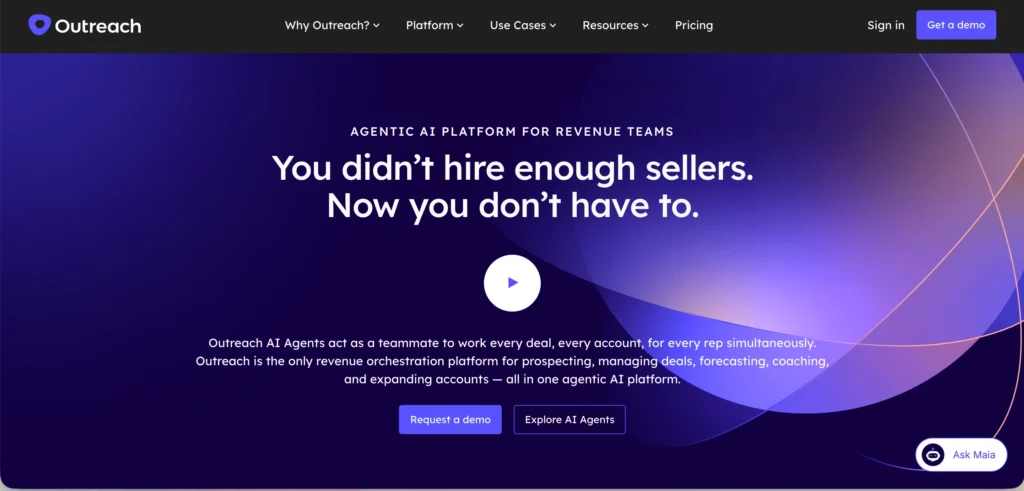
Outreach.io is a sales engagement platform designed to boost productivity, facilitate communications, and maximize sales performance. It helps users to automate email sequences, manage interactions with customers, analyze engagement data, and improve pipeline efficiency using AI-powered insights.
Advanced features of Outreach make it especially useful for enterprises with large sales teams and an organized outreach strategy. Businesses can standardize processes, improve visibility, and enhance overall sales execution from a centralized platform.
Key Features:
- AI-powered sales engagement
- Automated outreach sequences
- Conversation intelligence
- Revenue forecasting
- Performance analytics
Pros:
- Strong enterprise functionality
- Advanced AI capabilities
- Excellent sales engagement tools
- Detailed reporting features
- Scalable platform
Cons:
- No public pricing available
- Implementation requires planning
- Advanced features need training
- Better suited for larger teams
- Can be expensive for smaller businesses
Pricing:
| Plan | Pricing |
| Amplify Core | $100 to $120/ user/month |
| Amplify Plus | $130 to $160/ user/month |
| Amplify Pro | $160 or more/ user/month |
Why Choose Outreach?
Outreach helps enterprise sales teams automate communication, improve engagement, and make data-driven decisions through advanced analytics and AI-powered insights.
Benefits of Using Sales Automation Software
Sales automation software isn’t just about cutting down on manual tasks. It can enhance workflow, boost client connections, and help businesses establish a more streamlined sales funnel. Some of the most significant advantages to keep in mind are:
- Higher Conversion Rates: When communications are automated and followed up in a timely fashion, businesses can reach out to prospects in a more effective way that will boost their chances of converting leads into customers.
- Better Sales Visibility: Centralized dashboards make sales management easier as they give an overview of pipeline performance, deal progress, and team activities.
- Improved Revenue Forecasting: By collecting important metrics related to sales performance, sales automation platforms enable businesses to make more precise predictions and plan for future growth.
- Stronger Team Collaboration: Customer data and automated processes help ensure a smoother flow of information among salespeople, managers, and other teams.
- Scalable Operations: Automations help to manage more leads and sales activities without adding too much administrative burden.
- Improved Customer Experience: When there is uniformity in message and quick reply, the buying process is smoother, and it enhances the relationship with the customer.
How to Choose the Right Sales Automation Tool
Choosing the best sales automation system involves considering your business objectives, sales method, and expansion strategies. The ideal solution should meet the current needs of your organisation and be effective when your organisation grows.
- Understand Your Sales Requirements: The first step is to define your sales team’s issues. Knowing what you need will help you limit the platforms that will have the most relevant features.
- Evaluate Automation Capabilities: There are varying degrees of automation capabilities in different tools. Search for the platform that can streamline the most common tasks that your team does and can accommodate future workflow needs.
- Consider Ease of Use: The platform should be intuitive, which will prompt quicker adoption and reduce training needs. Complex systems offer greater functionality, but can be slower in implementation.
- Review Integration Options: The software needs to integrate with your current CRM, marketing, communication, and business applications, so that all your data flows seamlessly.
- Compare Pricing and Value: Don’t just think of the monthly fee. When exploring solutions, think about features available, user limits, scalability, and long-term value.
- Check Scalability: Select a platform that will grow with your business, whether you are expanding your team, sales, or the complexity of your workflow.
Conclusion
Sales automation software is essential for any business looking to streamline processes, strengthen customer relationships, and increase sales. Investing in one of the best tools for sales automation can automate repetitive tasks, improve lead management, and allow your sales team to focus on what matters most—closing more deals.
Salesforce Sales Cloud and Outreach are excellent options for businesses that require enterprise-level functionality, while HubSpot Sales Hub, Freshsales, and Pipedrive are ideal for startups and growing businesses. If lead generation and outreach are your priorities, Apollo.io is a strong choice. Meanwhile, Zoho CRM and Monday Sales CRM offer an excellent balance of features, flexibility, and affordability.
When choosing a sales automation platform, consider your sales process, budget, automation requirements, and future growth plans. Selecting the right solution today will help you build a more efficient, scalable, and high-performing sales team in the years ahead.
FAQs
1. What is Sales Automation Software?
Sales automation is the practice of using software to automate usual sales processes like lead management, follow-up email messages, contact updates, meeting scheduling, pipeline tracking, and reporting.
2. What is the most Suitable Sales Automation Solution for Small Businesses?
Zoho CRM, Freshsales, and HubSpot Sales Hub are popular choices for small businesses because they provide great automation capabilities, intuitive interfaces, and cost-effective pricing.
3. Is Sales Automation Software AI-driven?
Yes. Lots of modern platforms feature Artificial Intelligence elements, like lead scoring, sales estimating, workflow tips, and client insights, which help to enhance the decision-making process and productivity.
4. Does Sales Automation Help in Increasing Conversion Rates?
Yes. Automation can help companies have a quicker response time, consistent communication, and better lead management, leading to higher conversion rates.
5. Can Sales Automation Software be used by Startups?
Absolutely. Various platforms have free plans or low entry-level pricing, enabling startups to automate their sales operations and grow their businesses with minimal initial investment.